Basque player in Kosovo: Here they see me as the ‘Spanish Muriqi’
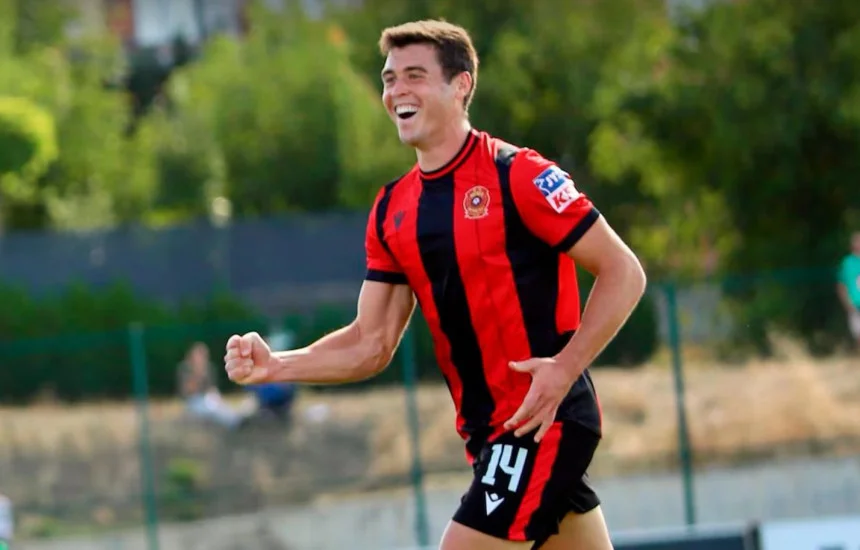
Oier Sarriegi, developed at Athletic Bilbao, plays for historic club Drenica in the Kosovo Superleague. The San Sebastian-born defender speaks to “AS” from Skenderaj. Oier Sarriegi had never imagined he would end up playing in a new and unfamiliar country like Kosovo. Developed in the academy of

Oier Sarriegi, developed at Athletic Bilbao, plays for historic club Drenica in the Kosovo Superleague. The San Sebastian-born defender speaks to “AS” from Skenderaj
Oier Sarriegi had never imagined he would end up playing in a new and unfamiliar country like Kosovo.
Developed in Athletic Bilbao’s academy and later playing for Alaves B, Tudelano, Ebro and Bulgaria’s Beroe, the right-back, who was born in San Sebastian, decided to continue his career at a different level by signing for Drenica, one of Kosovo’s oldest and best-known clubs. After making his debut for the Skenderaj club, Sarriegi became the second Spanish player in the history of the Kosovan league, after Jalen Blesa, who played for Istog, Rahovec and Prishtina just a few years ago.
“It’s a unique experience. I’d never thought of playing in Kosovo, but I wanted to get out, try something different and see how far I could go,” says Sarriegi, who is still adapting to his new surroundings.
He arrived at the end of August, on the last day of the transfer window, and needed no time to make his debut for the team.
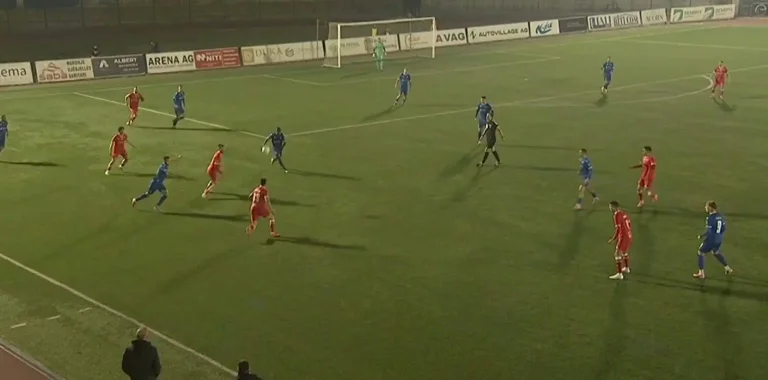
“In my first start, we played against Drita, which is the best team in the country, and managed to win 1–0. I played 90 minutes and put in a good performance, so I’m very happy,” he says with a smile.
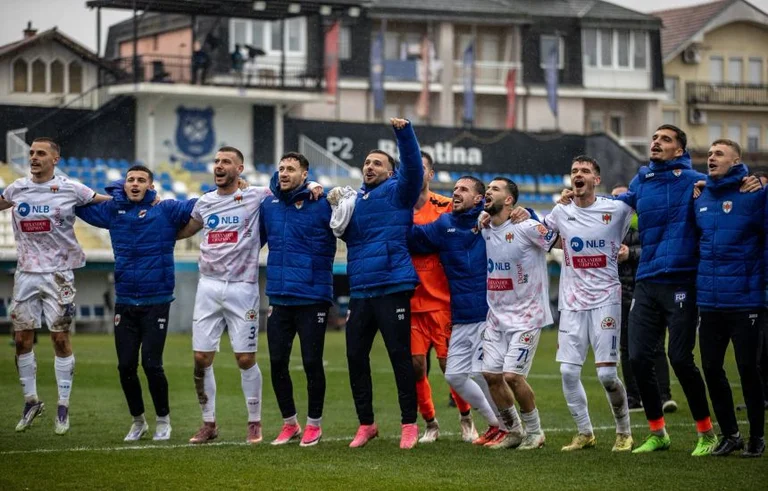
The victory was more than just three points. It was a positive sign for Drenica, which has returned to the top flight and aims to grow with the help of new investors.
After seven matches, the Skenderaj team sits in fourth place with three wins, two draws and two losses.
“The goal is clear: to finish in one of the top four places and be able to play in Europe next year,” says Sarriegi, who has already become a key, undisputed player in the starting lineup.
Although Spain does not officially recognize Kosovo as an independent state, the Balkan country declared its independence in 2008 and also has a notably young population, something evident in its stadiums.
“I was surprised by the passion for football. At our first match, there were more than 3,000 spectators in the stands, and you can see that people live it with great passion, even more so than in Spain,” he says.
Drenica, the club from the city of Skenderaj, is one of the country’s historic clubs, although it has only recently regained its place in the Superleague after several years in the Second Division.
“People stop you in the street, cheer you on… when you say you play for Drenica, you can tell it’s a much-loved club here,” says Oier.
The passion goes hand in hand with a growing league. Kosovo’s Superleague is seeking to make a name for itself in Europe, with clubs such as Drita, which reached the league phase of the Conference League this season and will face Rayo Vallecano, among others.
“I was really surprised by the level. It’s a very physical league, with constant action, but the local players are very talented. Plus, there are foreign players from many countries who raise the standard. It’s similar to what I experienced in Bulgaria—a professional and demanding league,” the full-back explains.
Although the Kosovo Superleague is “widely followed,” Oier Sarriegi was surprised by the large number of fans who watch Spanish football.
“I was really surprised that, just as in Bulgaria, they know so much about the Spanish league. They know I played for Athletic Club and Alaves. They know those clubs and many others.”
“Here they see me a little like Kosovo’s Muriqi”
The biggest figure in Kosovan football is Vedat Muriqi, the Mallorca striker and an absolute idol in his home country.
“Here they jokingly tell me I’m a bit like Kosovo’s Muriqi, because I’m the only Spaniard playing in this league. They find it interesting and tell me,” Oier recounts.
The comparison speaks to the importance football holds in the country’s identity:
“Muriqi is like a demigod. Every goal he scores for the national team is an achievement. Against Sweden, he scored and the stadium was full. The atmosphere was electric.”
The Kosovo national team dreams of qualifying for a World Cup for the first time. For Oier Sarriegi, however, the challenge is not limited to the pitch. His daily routine in Skenderaj also requires him to adapt to new customs and a different culture.
“We speak Albanian here, and not everyone speaks English, although young people do. I’m learning the basic words to integrate and show respect. I’ve also been struck by religion. It’s a Muslim-majority country, and many of my teammates pray before and after training. At first, it’s surprising, but then you see it as part of the country’s normal way of life,” explains the San Sebastian-born full-back.
Far from the images of a country scarred by war, Oier Sarriegi has found a different reality.
“I was surprised by how modern everything is. My apartment is new, the facilities are very good and the quality of life is good. Maybe from the outside you expect something different, but when you get here, you see a country that’s growing, with young people and a lot of life on the streets.”
A long journey
His career has been marked by versatility. From a striker in his early days at Lezama to a right-back, and at times a centre-back and even a left-back, Oier has always adapted to circumstances. “My natural position is right-back, but I adapt to whatever the coach asks of me. I think I can do well here, because it’s a very physical, fast-paced league with less time to rest, which suits my characteristics,” he explains.
After his time in Bulgaria, where he enjoyed his first experience abroad with Beroe, his goal is now clear: to play professional football.
“I’m very grateful to my agent, Tonin Fernandez, for the opportunity he gave me by taking me to Beroe. In Spain, it’s very difficult to make it to La Liga or the Second Division. These leagues give you the chance to be a professional, to play in stadiums with 10,000 or 15,000 spectators, and they’re unique experiences. I encourage any player who has the opportunity to go abroad to do it. It changes your life,” he says.
At 28, Sarriegi believes he still has a long way to go.
“My ambition is sky-high. I want to have a good season here, help Drenica grow and keep progressing in my career. I still have many years left in football and want to go as far as possible.”
For now, his name is already part of the history of Kosovan football. And if everything goes according to plan, Oier Sarriegi’s adventure could be a turning point, both for him and for a country that is beginning to see football as a window onto the world.